
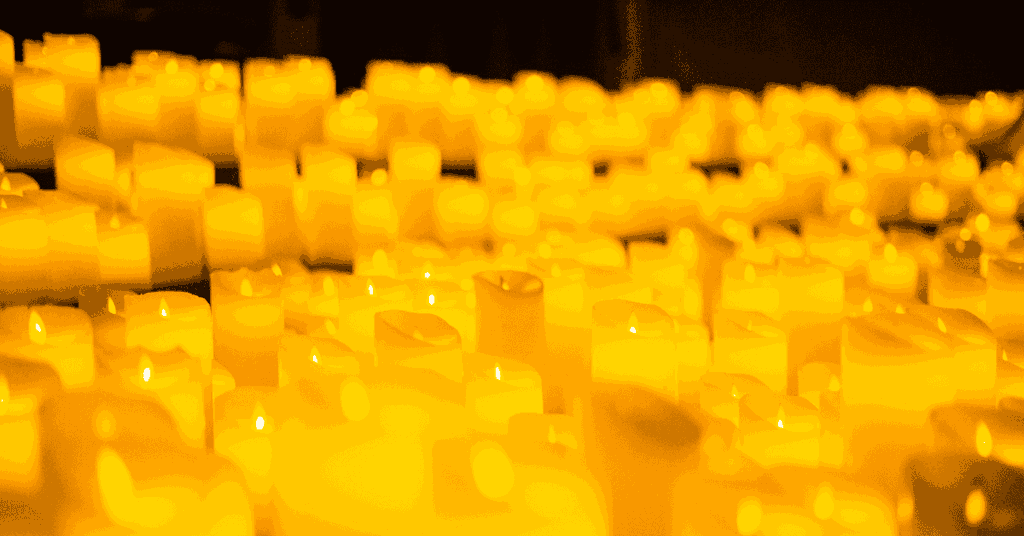
You know Candlelight in Washington DC—the music, the glow, and the atmosphere. But have you ever wondered what it actually takes to make that glow? Think thousands of candles: sometimes 5,000 candles, sometimes 15,000 candles, occasionally 30,000 candles—always more than your eyes expect.
It looks effortless when you’re seated and the first chord blooms. But before that calm, there’s a careful routine—unpacking, placing, lighting—repeated again and again until the room is ready. Rows and rings, aisles and arches: every corner needs attention because thousands of candles don’t arrange themselves. The scale is the secret you rarely see.
Table Of Contents
The quiet work before the first note
Unpacking looks simple: boxes open, trays slide out, and clusters of candles move into position. Layers become lines, and lines become patterns waiting to fill the space. But placement is where the room takes shape—along aisles, around the musicians, at the foot of columns, tracing paths. Each candle is nudged straight, spaced by eye, aligned into arcs and grids until the design settles.
Then comes lighting. Light by light, section by section, the glow spreads—rows warming first, then corners, then the center—until the hall radiates a soft, steady glow.
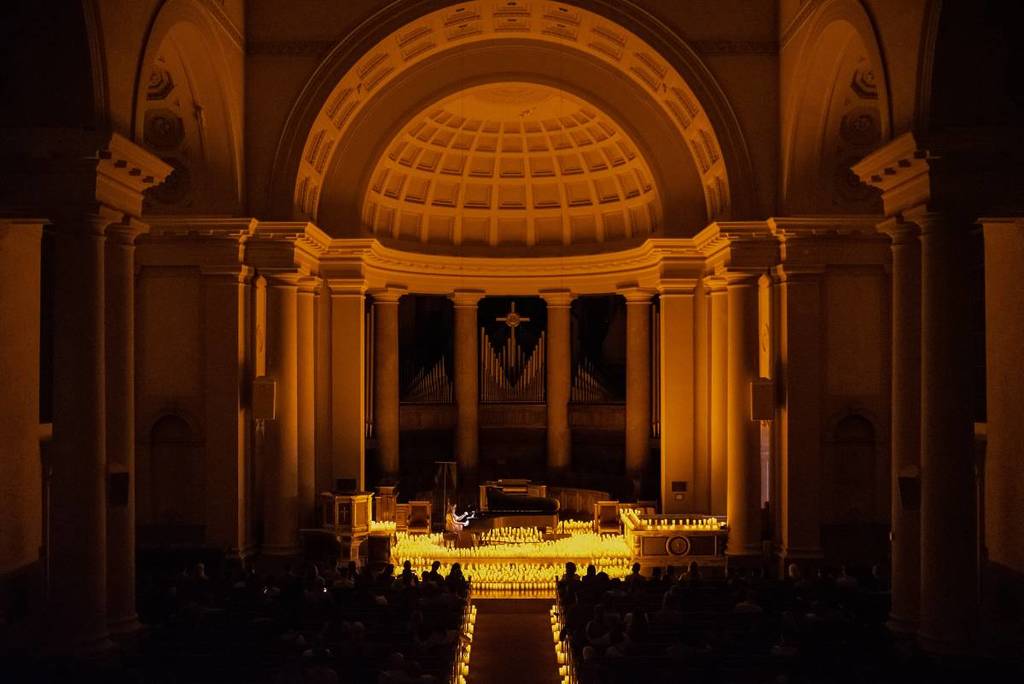
That’s how effort turns into ease. In National City Christian Church, stone seems to soften, pews edge with amber, and the nave gathers you in. The space doesn’t change; the feeling does—depth appears, details sharpen, and the music seems to arrive already glowing.
To put it in perspective: if you lined up 15,000 candles end-to-end, they would be as tall as 22 and a half Washington Monuments!
And when the applause fades, it reverses. Each candle goes dark, straight back to its tray, then into boxes. Floors clear, aisles open, and the room returns to itself.
Then it happens again—the next date, the next venue. Unpack, place, light, delight. Repeat. Not rushed, not random, just steady work so every performance feels like the first time.
Now you know. What looks like ease is built from patience and scale. It’s the quiet craft that turns a simple room into a concert you can see as much as hear.
29 October 2026 18:45 + more dates
National City Christian Church
30 October 2026 18:45
National City Christian Church
29 October 2026 20:45 + more dates
National City Christian Church
5 November 2026 18:45 + more dates
National City Christian Church
7 November 2026 18:45 + more dates
National City Christian Church
7 November 2026 20:45 + more dates
National City Christian Church
5 November 2026 20:45 + more dates
National City Christian Church
6 November 2026 18:30
Martin Luther King Jr. Memorial Library
20 November 2026 18:30 + more dates
Martin Luther King Jr. Memorial Library
14 November 2026 20:45 + more dates
National City Christian Church
20 November 2026 20:30 + more dates
Martin Luther King Jr. Memorial Library
14 November 2026 18:45
National City Christian Church
28 November 2026 20:30 + more dates
Miracle Theatre
28 November 2026 18:30
Miracle Theatre
3 December 2026 18:30
The Howard Theatre
3 December 2026 20:45
The Howard Theatre
12 December 2026 18:30 + more dates
Martin Luther King Jr. Memorial Library
18 December 2026 20:30
Martin Luther King Jr. Memorial Library
18 December 2026 18:30
Martin Luther King Jr. Memorial Library
20 December 2026 18:30
The Howard Theatre
19 December 2026 18:30
Miracle Theatre
2 January 2027 20:30
Martin Luther King Jr. Memorial Library
13 February 2027 20:45
National City Christian Church