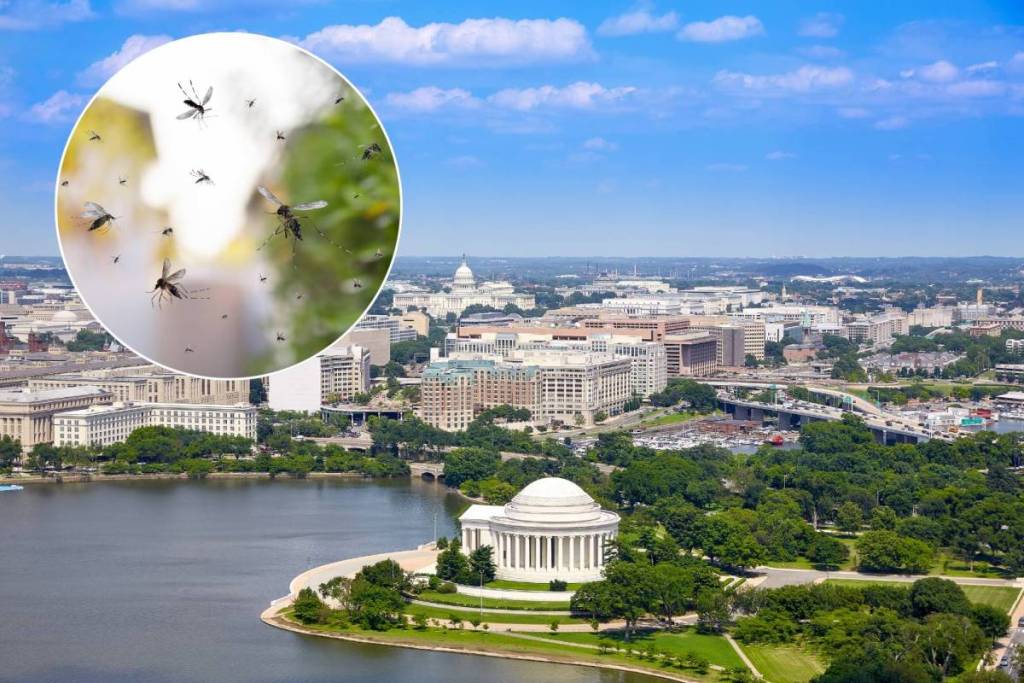

Washington, D.C. has picked up a rather unpleasant new title: America’s buggiest city.
The nation’s capital has climbed to the No. 1 spot in Thumbtack’s latest ranking, moving up from No. 3 in the company’s previous ranking.
The study comes at the height of summer, when warm and humid conditions can make mosquitoes, ants, flies and other pests particularly troublesome.
For D.C. residents, the ranking is another reminder that summer in the capital can bring plenty of unwanted visitors — and not all of them are tourists.
What makes Washington, D.C. the buggiest city in the nation?
According to Thumbtack, the ranking is based on consumer demand for pest-related home services, rather than a literal count of the number of insects living in each city.
The company tracks requests for services including pest control, pest inspections, bed bug extermination and outdoor pesticide applications.
That makes D.C.’s No. 1 ranking particularly notable because it reflects how frequently residents are turning to professionals for help with unwanted pests.
Summer can also be an especially active time for insects, with Thumbtack previously identifying July and August as the buggiest months of the year.
Warm, humid weather can create favorable conditions for mosquitoes, ants, flies and other pests, adding to the seasonal nuisance for homeowners.
The ranking does not necessarily mean Washington has more bugs than every other city in the country.
Instead, it indicates that D.C. has the highest relative demand for the pest-related services included in Thumbtack’s analysis.
What was the methodology behind this study?
Thumbtack’s rankings are based on customer requests on its platform for pest control services, pest inspections, bed bug extermination and outdoor pesticide applications.
The company then looks at the relative frequency of those requests and adjusts the results based on the population of the relevant states and metropolitan areas.
That population adjustment is important because a larger city will naturally generate more service requests simply because it has more residents.
By measuring requests relative to population, Thumbtack attempts to compare pest-related demand across different metropolitan areas on a more even basis.
The ranking therefore measures demand for pest services, rather than conducting an entomological survey of insects in each city.
In other words, D.C. being No. 1 means its residents are turning to Thumbtack for pest-related services at the highest relative rate in the study — not that scientists have counted more bugs in the District than anywhere else.
And D.C.’s rise is significant: in Thumbtack’s previous ranking, released in 2025, Washington ranked No. 3, behind Austin and Dallas. Atlanta was No. 4, while Houston rounded out the top five.