
Earlier this week, the District broke local temperature records for one of the warmest March 10ths measured in decades, but within 24 hours, D.C. temperatures crashed to the point where parts of the D.C. area experienced freezing rain and snow!
While the drop in temperature was forecasted, it truly felt impossible while the sun was shining and the warm air truly felt like spring.
In other words, this year’s ‘false spring‘ hit Washingtonians harder than it ever has, and quickly humbled our hopes for an end to the cold winter weather.
How much did the temperature drop around D.C. in 24 hours?
The District experienced a 51-degree swing, from 84 degrees and sunny one day, to 33 degrees with freezing rain and snow the next!
The remarkable drop in temperature is the largest ever recorded within 24 hours in Washington, D.C., with records dating back to 1929.
The only ever similar temperature drop on record in D.C. was nearly a century ago, in 1934, when temperatures went from 65 degrees to 14 degrees in a single day.

Did the record-breaking temperature ruin any of the District’s blooms or blossoms?
Washington, D.C., is home to many gorgeous and iconic blooms that bring the city to life every spring, but not all of them bloom at the same time, which means that one bad storm is highly unlikely to impact all of the blooms and blossoms around the District.
That being said, two particular blooms were at the highest risk of impact from the historic temperature drop and subsequent weather:
- The Okame cherry blossoms were just about at their peak bloom before the temperature shift, which means that most of their flowers likely fell due to shock from the weather.
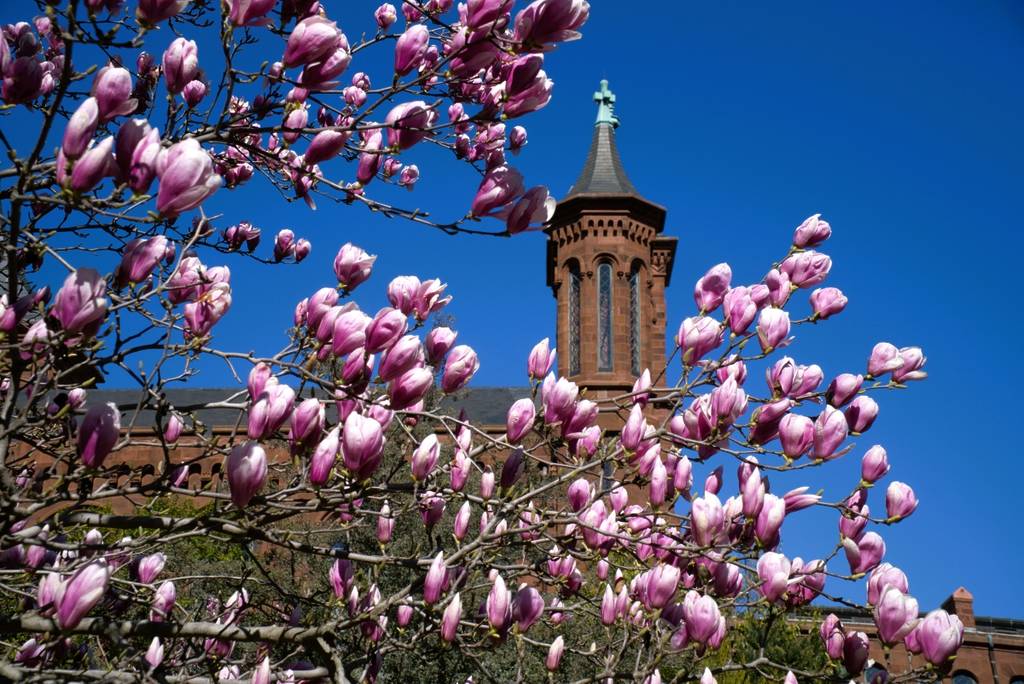
- The magnolia trees around the District, which were just about to start flowering, seemingly made it through the day unscathed. According to the Smithsonian Garden, the magnolia trees around the Enid A. Haupt Garden and the Smithsonian Castle seemed to be progressing towards their bloom as if unfazed.
Fortunately, the District’s iconic Yoshino cherry blossoms were not impacted by the major shift as they are not expected to bloom until the very end of the month or the start of April.