Washington, D.C. has once again landed near the bottom of a major national ranking measuring driving safety, reinforcing its reputation as one of the most challenging places to get behind the wheel.
According to Allstate’s 2026 America’s Best Drivers Report, the District ranked as the second-riskiest city for drivers among the 200 largest cities in the United States, trailing only Boston.
The annual report analyzes auto insurance claims to determine how often drivers are involved in collisions and compares those figures with the national average.
Here’s where Washington ranked—and why Allstate says driving habits and local conditions continue to make the District one of America’s least safe cities for motorists.
Where Washington, D.C. ranks among the nation’s least safe cities to drive in
Washington, D.C. ranked 199th out of 200 cities in Allstate’s 2026 America’s Best Drivers Report, making it the second-riskiest city for drivers nationwide.
Only Boston performed worse in this year’s rankings.
According to the report, the average D.C. driver goes just 4.24 years between collisions, compared with much longer intervals in safer cities across the country.
Drivers in the District are also 156.3% more likely to experience a collision than the national average, highlighting just how frequently crashes occur in the city.
The ranking remained unchanged from last year, showing that Washington continues to be one of the country’s most collision-prone places to drive despite growing awareness around road safety.
By comparison, Brownsville, Texas—the nation’s safest city for drivers—has motorists averaging nearly 15 years between collisions.
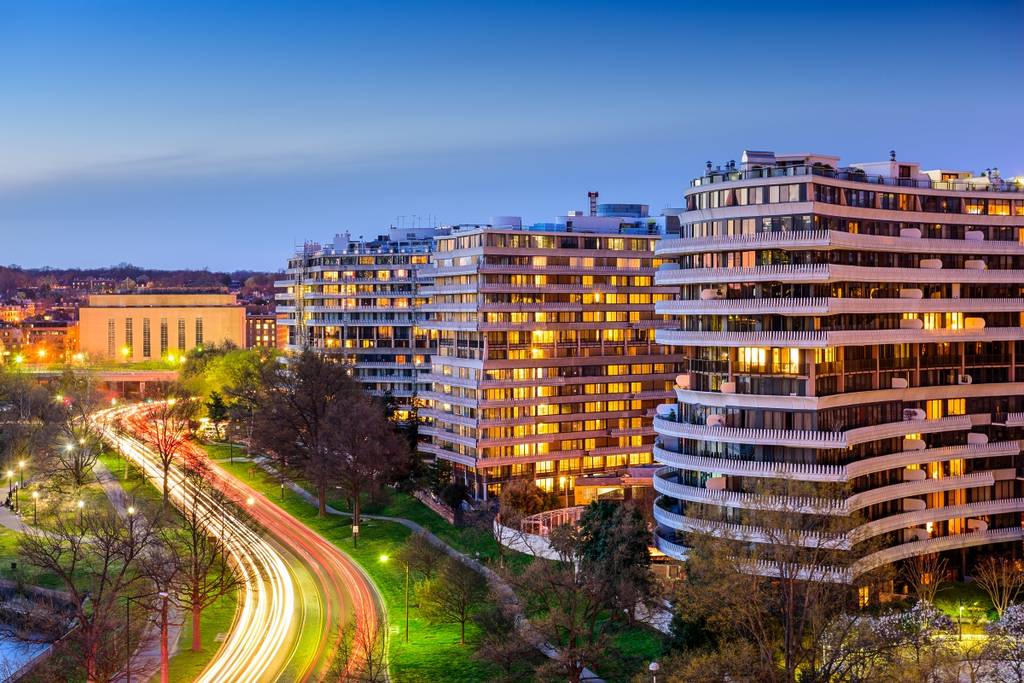
Why is Washington, D.C. considered such a risky place to drive?
Beyond insurance claims, Allstate supplemented this year’s report with insights from its Drivewise program, which tracks real-world driving behaviors such as speeding, hard braking, phone use and nighttime driving.
The data showed Washington, D.C. stands out for high levels of nighttime driving and is also among the cities with the highest rates of phone use behind the wheel—two behaviors that can significantly increase crash risk.
Speaking with WTOP, an Allstate spokesperson also pointed to the District’s uniquely complex driving environment, which includes heavy pedestrian traffic, buses, rideshare vehicles, delivery drivers, traffic cameras and dense urban congestion that all contribute to a greater likelihood of insurance claims.
How Allstate determined the rankings
The 2026 America’s Best Drivers Report marks the 18th edition of Allstate’s annual study and ranks the 200 most populous U.S. cities using the company’s auto insurance claims data.
Rather than evaluating traffic tickets or fatal crashes, the report measures how frequently drivers are involved in collisions that result in property damage or collision insurance claims.
Cities are then ranked based on the average number of years between collisions and how likely drivers are to be involved in a crash compared with the national average.
For 2026, Allstate also incorporated anonymized insights from Drivewise, its app-based driving program, to better understand behaviors like distracted driving, speeding and nighttime travel that may contribute to collision risk.
The company says the goal is to help drivers identify habits that can reduce crashes and potentially lower insurance costs over time.