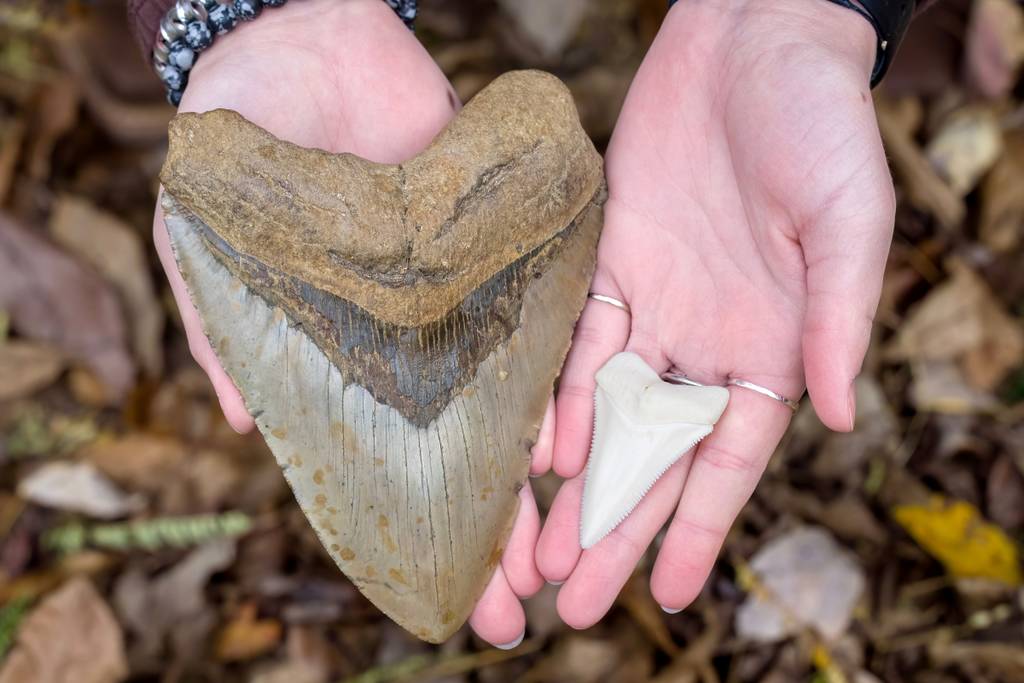

Millions of years ago, the Otodus megalodon roamed the seas as the largest shark ever recorded, reaching lengths of roughly 80 feet with hundreds of teeth larger than the palm of your hand!
Today, millions of years later, Marylanders can officially claim this prehistoric giant as their own, thanks to the state’s General Assembly formally passing legislation designating it as the official state shark of Maryland!
The Maryland Senate and House of Delegates passed the measure on Monday, April 13th, of this year, making Maryland the first state in the nation to recognize its own official state shark.
Why is the Megalodon now Maryland’s official state shark?
The answer to this question is actually as old as the Megalodon itself!
Megalodons have a close connection to Maryland’s geologic record, as it is one of the richest fossil beds for Megalodon teeth in the world!
Fossilized Megalodon teeth are considered highly collectable, making their significant presence across Maryland’s coastline geologically significant.
These fossilized teeth have been found in at least seven Maryland counties:
- Anne Arundel County
- Calvert County
- Caroline County
- Charles County
- Dorchester County
- Prince George’s County
- St. Mary’s County

Where are the best beaches to find fossilized Megalodon teeth?
There are plenty of excellent spots for finding fossils from these prehistoric giants, but here are five of the top spots around Maryland that will give you your best odds:
- Calvert Cliffs State Park – Famous for its rich fossil deposits along the beach, this is one of the most reliable spots for finding fossilized shark teeth in the world!
- Brownie’s Beach – A fairly small beach that requires non-residents to pay an entry fee during the summer, this place consistently yields well-preserved fossils.
- Matoaka Cottages Beach – A privately managed beach with a $10-per-person (cash only) fee, it has excellent exposure to the fossil layers, but is a less common ‘fossil hunting’ destination.
- Flag Ponds Nature Park – A less-crowded fossil-hunting destination than Calvert Cliffs, it is still known as a great place to find an array of shark teeth of all shapes and sizes.
- Scientists’ Cliffs – Notably exclusive to residents and their guests, if you can manage to access the area’s restricted beach, you will have access to one of the richest fossil deposits in the world.