
Washington, D.C. has no shortage of famous museums, monuments and attractions, but one of its most fascinating collections is tucked away inside the 451-acre U.S. National Arboretum in Northeast D.C.
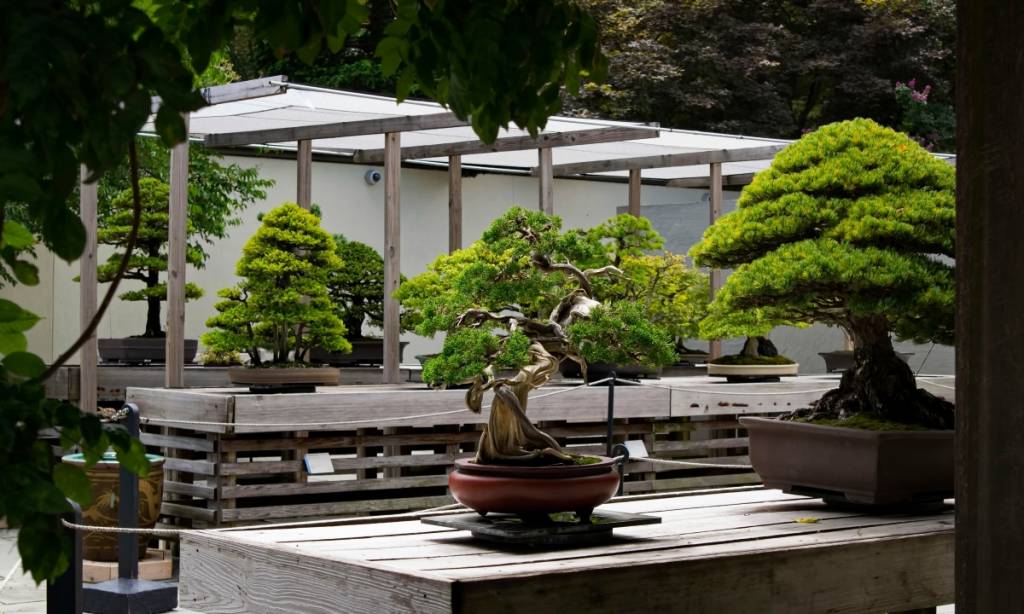
The National Bonsai & Penjing Museum is home to hundreds of bonsai trees, including specimens that are centuries old and have histories stretching across generations and continents.
Among them is the legendary Yamaki Pine, a Japanese white pine estimated to be over 400 years old that survived the 1945 atomic bombing of Hiroshima.
Best of all for visitors, the museum is free to visit, making it an easy addition to a D.C. day out that many tourists—and even locals—may overlook.
Where is the National Bonsai & Penjing Museum located?
The National Bonsai & Penjing Museum is located on the grounds of the U.S. National Arboretum at 3501 New York Avenue NE in Washington, D.C.
The museum is part of the Arboretum’s larger collection of gardens and horticultural attractions, so visitors can easily turn a trip to see the bonsai into a much longer afternoon exploring the grounds.
The Arboretum itself is administered by the USDA’s Agricultural Research Service and covers 451 acres.
The Arboretum grounds are open daily from 8am to 5pm, while the National Bonsai & Penjing Museum is currently listed as open daily from 10am to 4pm, except for federal holidays from November through February.
Admission and parking are free, and no tickets are required.

What makes it such an underrated destination?
Part of what makes the museum so easy to miss is that it isn’t sitting among the Smithsonian museums on the National Mall—it’s tucked inside one of D.C.’s largest and greenest public spaces. Yet the collection is remarkably significant, with the museum describing itself as a major international center for the study and display of bonsai and related arts.
The collection also goes far beyond traditional Japanese bonsai: visitors can see Japanese, Chinese, and North American collections, offering a look at different cultural traditions surrounding this horticultural art.
And then there is the history behind individual trees. The Yamaki Pine, for example, was maintained by the Yamaki family for generations before being donated to the United States as part of Japan’s 1976 Bicentennial gift.
That combination of living history, art, and nature is what makes the museum feel unlike a typical D.C. attraction.
What you can expect to see when you go
The museum is arranged around courtyards and gardens with three pavilions and two activity centers, creating a series of different spaces to explore rather than one conventional gallery.
The Japanese collection includes an extraordinary variety of specimens, while the Chinese Pavilion showcases penjing, the ancient Chinese art form that predates and influenced bonsai. The Chinese collection currently includes 36 trees, while the North American collection contains 63 trees created by artists living in North America.
One of the most famous trees to look for is “Goshin,” a Chinese juniper forest planting created by renowned bonsai artist John Y. Naka, which is prominently displayed at the entrance to the North American Pavilion.
But the real showstopper is the Yamaki Pine, the over 400-year-old Japanese white pine at the entrance to the Japanese collection.
Its history is extraordinary: the tree in the family’s nursery survived the atomic blast in Hiroshima on August 6, 1945; despite being just two miles from the blast site, the nursery was protected by a tall wall.
Today, that tree is still living and on display in Washington, transforming what might initially look like a small ornamental tree into a living connection to centuries of history and a powerful story of survival and peace.