The Smithsonian’s National Zoo & Conservation Biology Institute has had a very busy off-season this past winter, and while it doesn’t formally close during the winter, the reduced hours between September and mid-March mean fewer people make the effort to visit.
So, because quite a lot has changed since the National Zoo was last under its standard summer operating hours, now is the perfect time to plan a visit, whether it be with friends, family, or even for a date.
When is the Smithsonian’s National Zoo switching to its summer hours?
The National Zoo is switching from its winter operating hours to its standard summer schedule on Sunday, March 15th.
The scheduling change will give visitors two hours of additional time to enjoy the zoo during their visit, which means that the zoo will be open from 8 am to 6 pm, compared to the 8 am to 4 pm winter schedule it has been operating on since September.
The zoo will remain free to enter as per usual, but as always, you will need to reserve a free entry pass online in advance.
If you want to purchase a parking pass, however, it will cost you $30 if you reserve one in advance and $40 if you wait until the same day to make your booking.
What’s new at the Smithsonian’s National Zoo?
There have been a lot of things that have happened at the National Zoo since the summer of 2025!
Here are a few of the biggest stories to happen at the zoo over the past few months, but be warned that the various calves, cubs, babies, and/or hatchlings from this past winter likely won’t be viewable at the zoo until they are considered mature and healthy enough to do so, which could potentially take years.
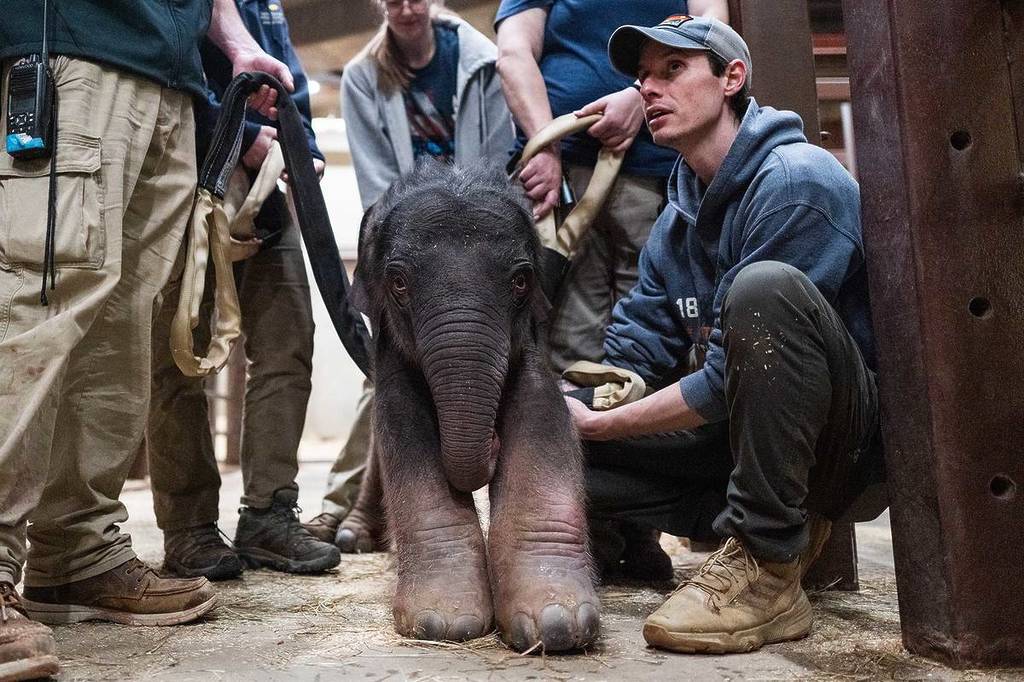
- A new baby Asian elephant calf named Linh Mai was born just last month.
- Expected public debut this spring.
- Two new Sloth bear cubs, Ozzy & Champa, were born in January.
- Expected public debut this spring.
- Four cheetah cubs were born last October.
- Unlikely to make a public debut, but can be viewed on the Smithsonian’s live den cam at the cheetah’s specialized 9-acre enclosure at the Smithsonian’s Conservation Biology Institute in Front Royal, Virginia.
Aside from these big recent stories, one of the biggest draws to the National Zoo remains its two iconic Giant Pandas, Bao Li and Qing Bao, who you can visit today!