
A partial lunar eclipse will be visible from Washington, D.C. this week, giving local star gazers a chance to see the Moon pass through Earth’s shadow.
The eclipse will take place overnight on Thursday, August 27th, into Friday, August 28th, with the partial phase beginning shortly after 10:30 pm.
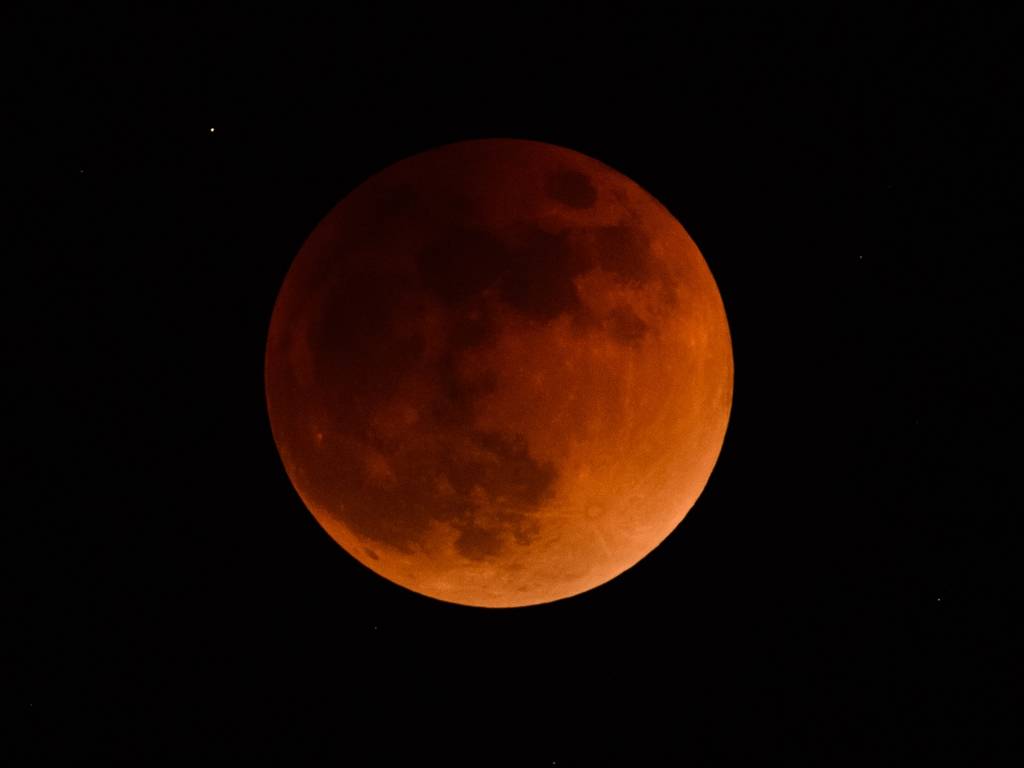
The event is expected to be especially impressive around midnight, when the Moon will be deeply immersed in Earth’s shadow and may take on a noticeable reddish or coppery appearance.
Unlike a solar eclipse, you won’t need special eclipse glasses to watch a lunar eclipse, making this an easy celestial event to enjoy from around the D.C. area.
When is the lunar eclipse going to be visible?
For people in Washington, D.C., the Moon will begin entering Earth’s outer penumbral shadow at 9:23 pm on Thursday, August 27th, although that initial stage will be difficult to notice.
The more dramatic partial eclipse begins at about 10:33 pm, when Earth’s darker umbral shadow starts moving across the Moon.
The eclipse will reach its peak at 12:12 am on Friday, August 28th.
At that point, more than 96% of the Moon will be within Earth’s umbra, according to FOX 5 DC, creating the deepest part of the eclipse for viewers in the DMV.
The partial phase will continue until approximately 1:51 am, while the less noticeable penumbral portion will linger until 3:01 am.
No special viewing equipment is required.
Unlike a solar eclipse, looking at a lunar eclipse with the naked eye is safe because you’re viewing reflected sunlight from the Moon.
What is a lunar eclipse?
A lunar eclipse happens when Earth moves between the Sun and the Moon, causing Earth’s shadow to fall across the lunar surface.
Because the Moon doesn’t produce its own light, what we see from Earth is sunlight reflected off its surface.
During a partial lunar eclipse, only part of the Moon passes through Earth’s darkest shadow, known as the umbra.
That’s why the upcoming event won’t turn the entire Moon red like a total lunar eclipse; instead, a large section of the lunar disk will become noticeably darker.
As the Moon moves deeper into the umbra, the shadowed portion can also take on a reddish, orange or coppery hue.
This happens because some sunlight is filtered through Earth’s atmosphere before reaching the Moon, producing the same general effect that gives sunsets their red and orange colors.
Best places to view the lunar eclipse around D.C.
The best viewing location will be somewhere with an unobstructed view of the sky and as little artificial light as possible.
Since the eclipse peaks after midnight, it’s also important to choose a location that remains accessible late at night.
A few D.C. spots worth considering include:
- The National Mall — The wide-open lawns around the National Mall offer some of the city’s best unobstructed views of the sky. National Mall and Memorial Parks sites are generally open to the public 24 hours a day, making this one of the easiest options for catching the midnight peak.
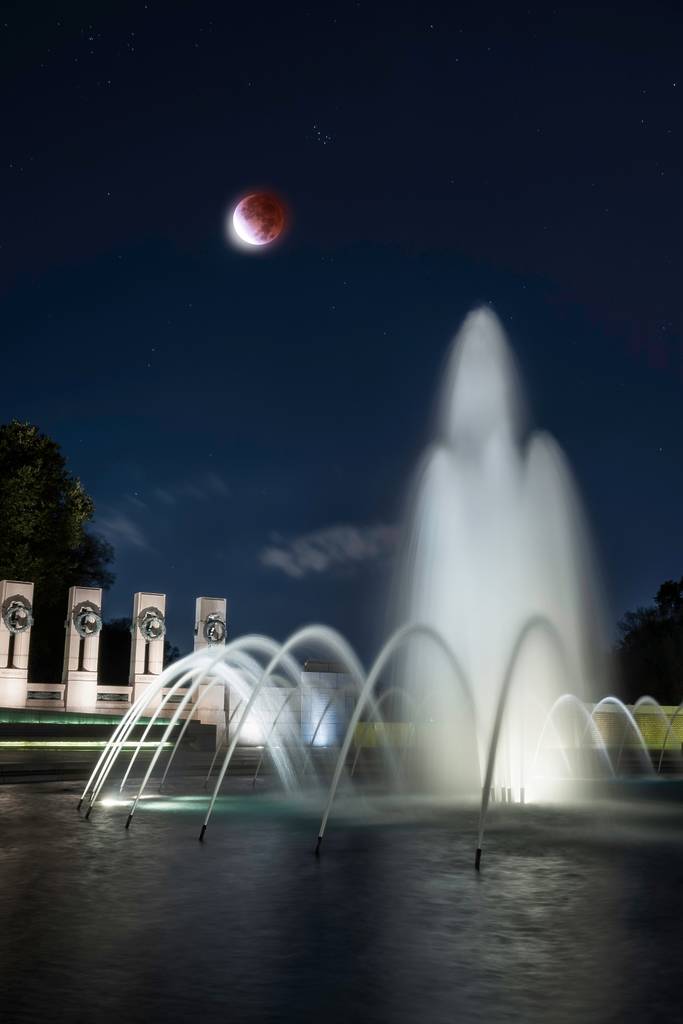
- Lincoln Memorial Reflecting Pool — The broad sightlines around the Lincoln Memorial and Reflecting Pool make this a particularly scenic place to watch the Moon, with the city’s monuments potentially providing a dramatic foreground for photographs.
- Martin Luther King, Jr. Memorial — Located along the Tidal Basin, the MLK Memorial is another 24-hour National Mall site with open views toward the sky.
- Jefferson Memorial — The area around the Jefferson Memorial offers another open-air location along the Tidal Basin and can make for an especially striking backdrop for eclipse photography.
- Constitution Gardens — This quieter section of the National Mall can offer a less hectic alternative to the areas surrounding the most famous monuments while still providing access to the open night sky.
- Meridian Hill Park — For those looking to stay farther north, Meridian Hill Park is open until midnight during May through October, meaning visitors can catch much of the most dramatic portion of the eclipse before the park closes.
If you’re planning to photograph the eclipse, arrive before the partial phase begins and give yourself time to find a spot with a clear view.
A tripod and a camera capable of manual exposure settings can also help capture the Moon as it darkens.