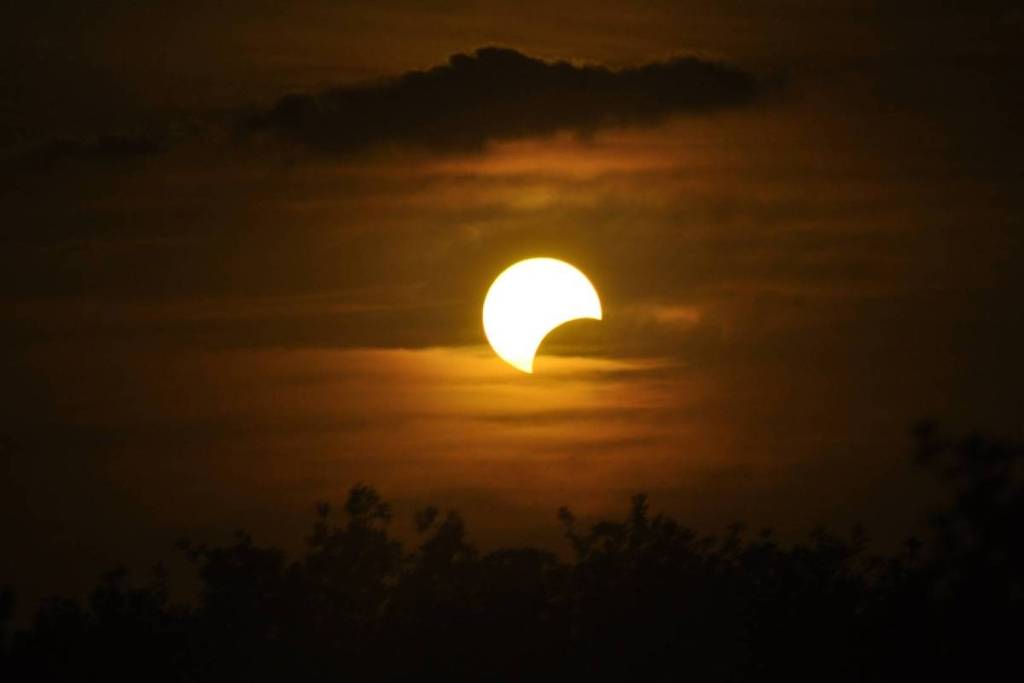

A spectacular total solar eclipse is set to sweep across parts of the world tomorrow, August 12th, but you don’t have to travel to Greenland, Iceland, or Spain to see at least a piece of it.
Washington, D.C., will experience a partial solar eclipse, giving residents a chance to watch the Moon take a small bite out of the Sun during the early afternoon.
The eclipse will be at its maximum around 1:53 pm, when about 4% of the Sun will be covered from the nation’s capital.
While it won’t come close to the dramatic totality visible elsewhere, it’s still a rare celestial event worth stepping outside for — provided you have the proper eye protection.
When is the solar eclipse going to be visible in Washington, D.C.?
The partial solar eclipse will begin in Washington, D.C., at approximately 1:17 pm on Wednesday, August 12th, according to NASA.
The eclipse will reach its maximum at 1:53 pm, when about 4% of the Sun will be covered, before ending around 2:27 pm.
That means Washingtonians will have roughly 70 minutes to catch the partial eclipse, although the most noticeable moment will be around the 1:53 pm peak.
Across much of the northern U.S., including D.C., the Moon will simply appear to take a small “bite” out of the Sun.
If you want to observe the phenomenon, do not look directly at the Sun without proper solar eye protection.
Regular sunglasses are not sufficient, and NASA recommends certified ISO 12312-2 eclipse glasses, handheld solar viewers, or another safe solar filter.
Looking at the Sun through a camera, binoculars, or telescope without a specially designed solar filter can also cause serious eye injury.
What is a solar eclipse?
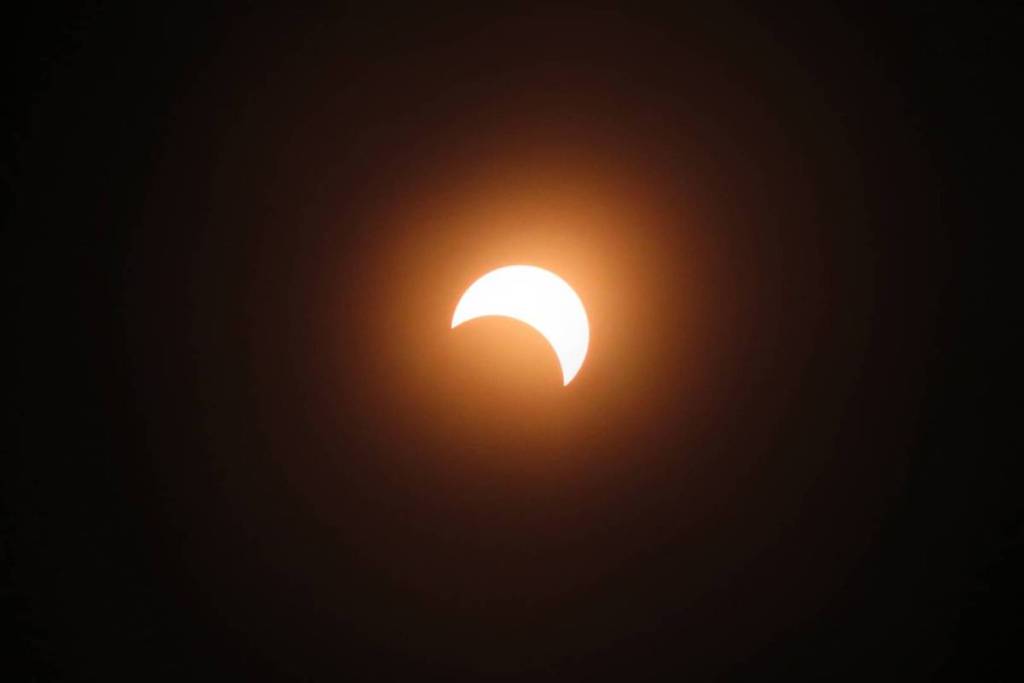
A solar eclipse happens when the Moon passes between Earth and the Sun, temporarily blocking some or all of the Sun’s light from reaching portions of Earth.
The August 12th event is classified as a total solar eclipse because observers along the central path will see the Moon completely cover the Sun.
However, people outside that narrow path — including those in Washington, D.C. — will see only a partial eclipse.
During a partial eclipse, the Moon does not completely cover the Sun, so the Sun continues shining brightly around the Moon’s silhouette.
Best places to view the eclipse around D.C.
Because only about 4% of the Sun will be covered in D.C., the best viewing locations will generally be places with wide-open views of the sky and minimal obstructions.
Some spots worth considering include:
- National Mall — The expansive lawns around the Mall offer plenty of open sky and multiple locations to set up for a quick eclipse watch.
- East Potomac Park — The open spaces around Hains Point provide broad views and relatively few tall buildings blocking the sky.
- Gravelly Point — Just across the Potomac in Arlington, this popular outdoor spot has wide-open views of the sky and river.
- National Arboretum — The expansive grounds offer plenty of outdoor space and sky views; just keep in mind that the grounds’ regular hours end at 5 pm, well after the afternoon eclipse.
- Georgetown Waterfront Park — The Potomac-facing park provides an open outdoor setting in the heart of the city, though nearby buildings and trees may affect sightlines depending on where you stand.
Since only a small portion of the Sun will be obscured, having a clear, unobstructed view may make a bigger difference than finding an ideal “eclipse spot.”
If you’re planning to watch from D.C., arrive with your eclipse glasses ready and look for a spot where buildings and trees won’t block your view of the sky.
For anyone unable to see the eclipse because of clouds or other conditions, NASA will also stream the eclipse live beginning at 1:15 pm EDT on August 12.