Flying through Washington Dulles International Airport (IAD) can sometimes feel like getting a workout before your trip even begins.
A new study from KURU Footwear ranked Dulles as the #3 airport with the longest walking distances in the United States, putting it behind only two other major hubs.
For many travelers in the Washington, D.C. region, the ranking may not come as a surprise given Dulles’ sprawling terminals, underground train system, and famously long concourses.
Still, the study is a reminder that travelers heading to IAD may want to wear comfortable shoes, allow extra time, and prepare for a surprisingly lengthy trek to their gate.

How big is Dulles Airport? How is it one of the longest walking airports in the nation?
Washington Dulles International Airport is one of the largest airports in the country, covering roughly 13,000 acres, making it significantly larger than many competing East Coast airports.
Its size is partly due to long runways designed to accommodate international flights, plus a layout initially built to allow for future expansion as passenger demand grew in the D.C. region.
Unlike more compact airports, Dulles separates many terminals and concourses with large physical distances, meaning passengers often move between check-in, security, trains, moving walkways, and extended gate corridors.
The airport is also known for its unique infrastructure, including the AeroTrain system and mobile lounges that shuttle travelers across different sections of the airport.
All of this creates a travel experience where passengers can easily rack up thousands of steps before even boarding their flight!
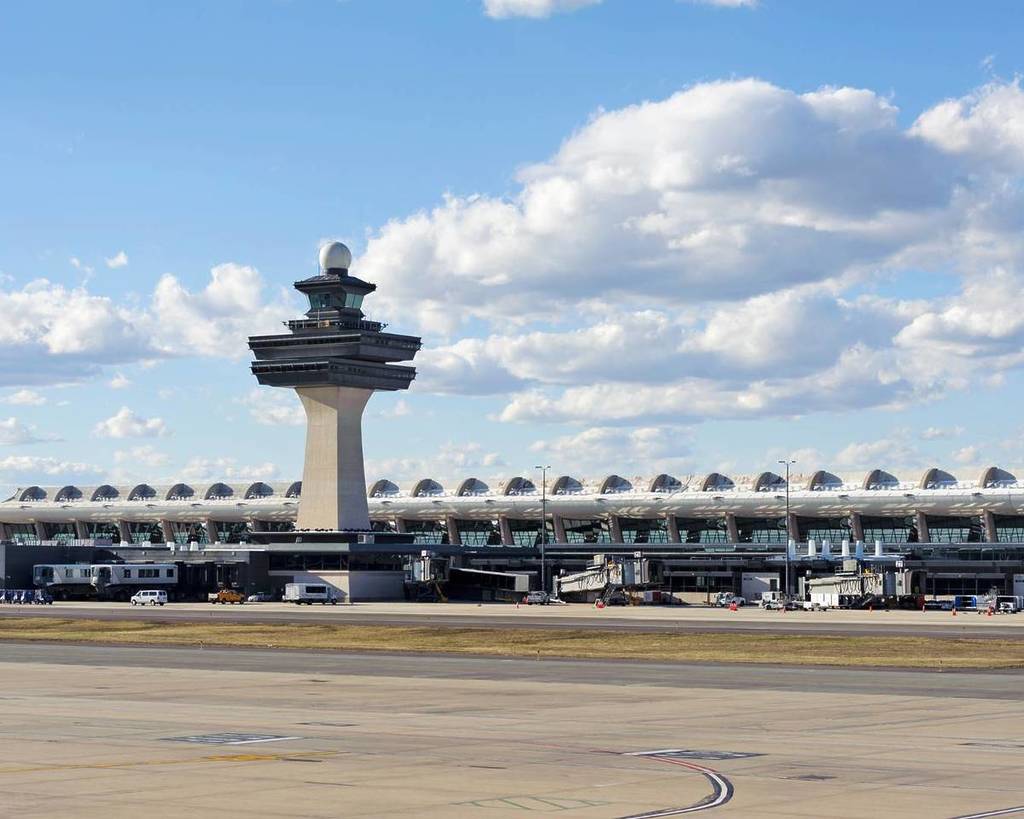
Tips on how to make getting around the airport easier
Travelers flying through Dulles should arrive earlier than they might at smaller airports, especially if flying internationally or during peak travel periods.
Wearing supportive walking shoes can make a noticeable difference, particularly for travelers navigating long concourses or making connections between terminals.
If available, use the airport’s AeroTrain instead of walking long stretches between concourses, as it can save both time and energy.
Pay close attention to gate assignments before heading toward your terminal, since some gates are much farther than others, and last-minute gate changes can add significant distance.
Travelers with mobility concerns should also consider requesting wheelchair assistance or airport accessibility services ahead of time.
What was this study’s methodology?
The study analyzed the average walking distance travelers face inside major U.S. airports, using publicly available airport maps, terminal layouts, and gate information.
Researchers reviewed how far passengers typically need to travel from common starting points to the gates or common amenities like lounges or shops, such as:
- security checkpoints
- terminal entrances
- transportation hubs
Airports were then ranked by total walking burden, helping identify which hubs require the most walking for travelers.
Because large international airports often have more spread-out terminals and longer concourses, airports like Dulles naturally ranked higher due to their expansive footprints and multi-terminal layouts. (The two airports that ranked above Dulles were Dallas/Fort Worth International Airport at #1 and Denver International Airport at #2)